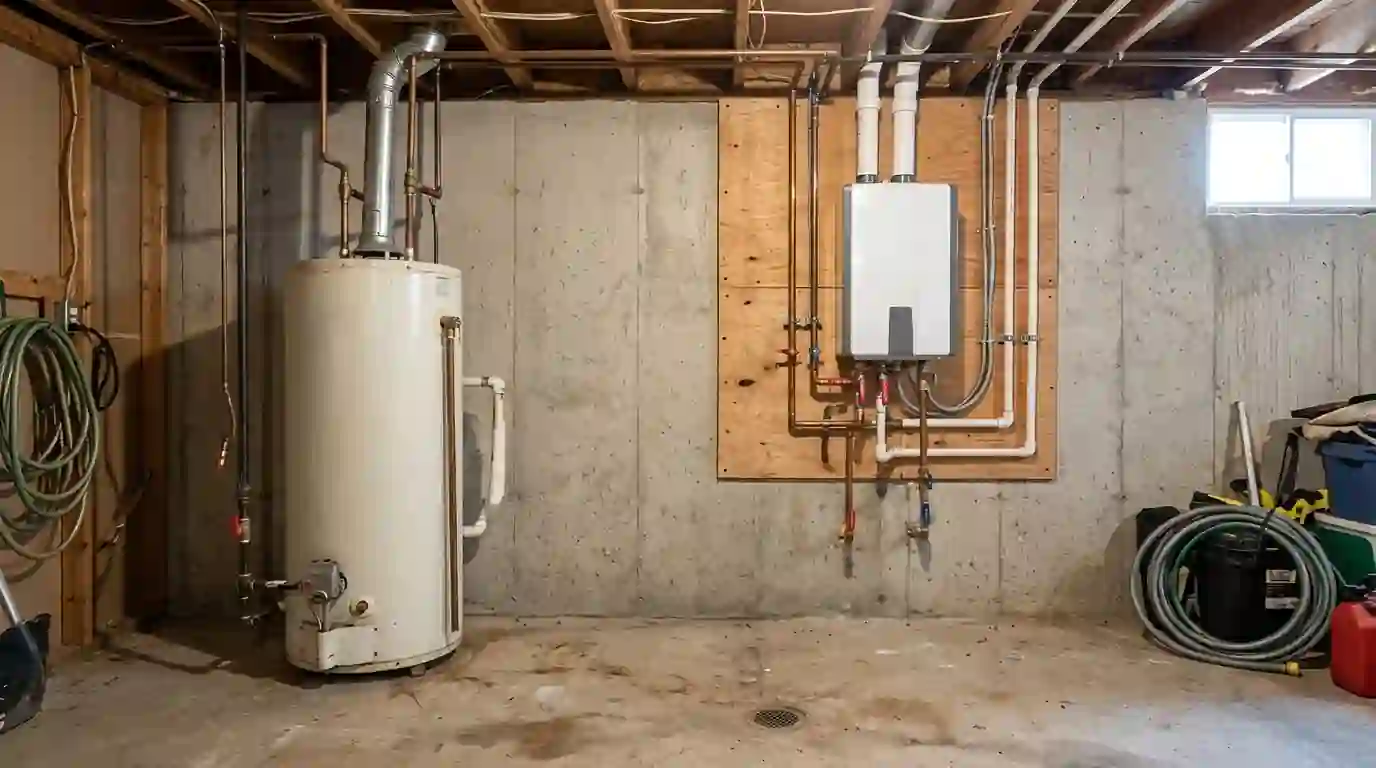
The Denver twist
Two local factors change the math. Winter inlet water is cold, often in the 40s, so the heater has to raise the temperature more. And altitude reduces the heat output of gas burners. A tank absorbs that with stored hot water. A tankless unit has to do it in real time.
When a tank makes sense
A properly sized 50 gallon gas tank handles most families of three or four. Replacement is straightforward, costs less up front and rarely needs gas line changes. If the budget is tight or you may move within a few years, a tank is usually the practical choice.
When tankless makes sense
Tankless units give endless hot water and free floor space. They last longer than tanks with yearly flushing. The catch is that they often need a larger gas line and new venting, which adds to the install cost.
- Large households with back to back showers
- Homes with a big soaking tub
- Owners planning to stay ten years or more
- Utility rooms where space is tight
Do not forget heat pump water heaters
If your current heater is electric, a heat pump water heater can cut its energy use dramatically. It needs space around it and a drain for condensate, and a basement usually works well.
Getting the size right
For tanks, look at first hour rating, not just gallons. For tankless, look at the flow rate at your winter temperature rise and your elevation. A plumber who sizes from Denver numbers will save you from cold showers in January.
Want a plumber to take a look?
Call any hour. A person answers and can usually tell you on the phone whether it needs a visit.