Why Denver pipes freeze when you least expect it
Denver does not stay frozen for months the way northern cities do. Instead it swings. A sunny 55 degree afternoon can turn into a night below zero when an arctic front slides down the Front Range, and that sudden drop is what catches pipes off guard.
Pipes that sit in exterior walls, over unheated garages, in crawlspaces or near a drafty rim joist lose heat fastest. Wind makes it worse, because moving cold air pulls heat out of a wall cavity much faster than still air does.
Before the first hard freeze
Most of the prevention work takes an hour or two in October.
- Disconnect every garden hose so frost free sillcocks can drain
- Shut off and drain the water line to an evaporative cooler
- Have sprinkler lines blown out and the backflow assembly drained or insulated
- Seal gaps where pipes pass through exterior walls
- Add foam pipe insulation to lines in garages and crawlspaces
When a cold snap is in the forecast
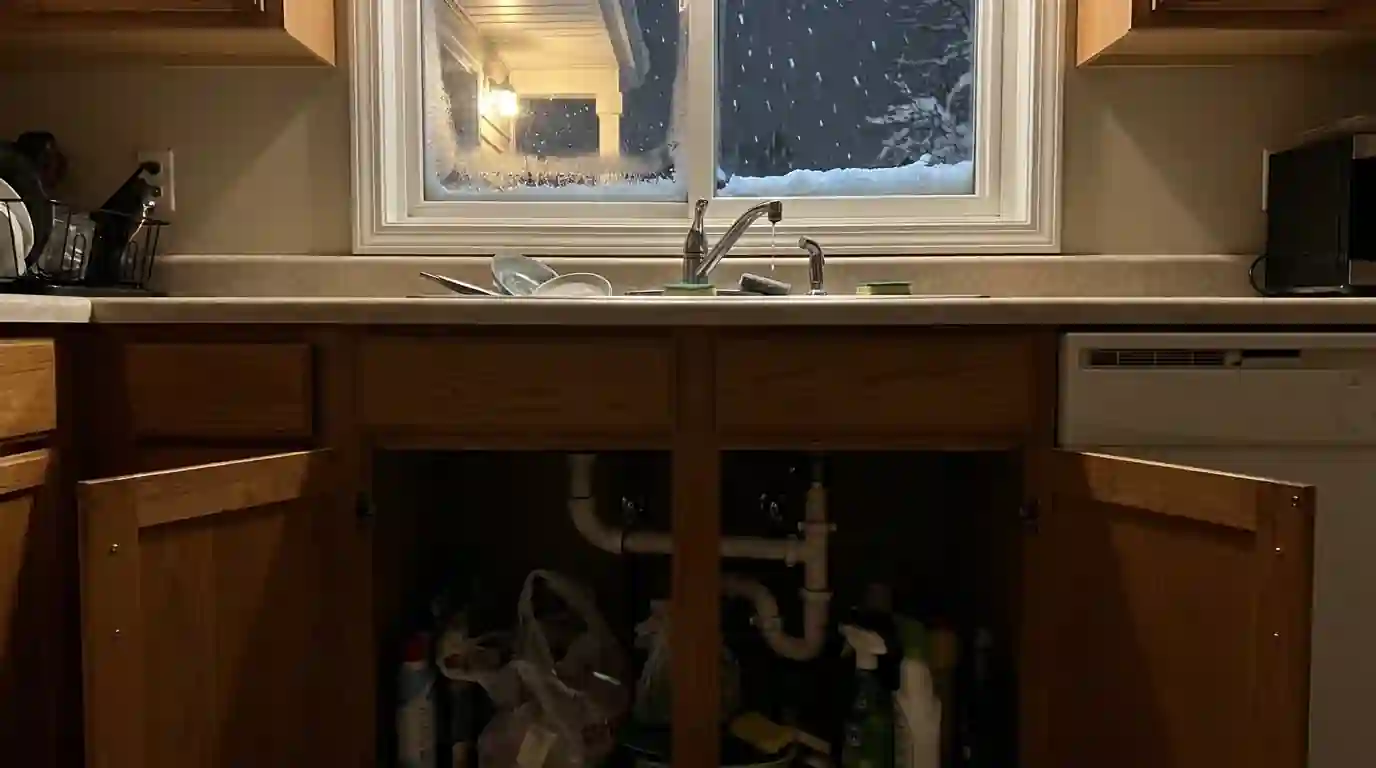
On the coldest nights, keep the thermostat at 55 degrees or higher even if you are away. Open cabinet doors under sinks on exterior walls so room heat can reach the pipes. Let the faucet farthest from the main drip slowly, hot and cold, which keeps water moving and relieves pressure if ice does form.
If you are leaving town, ask someone to check the house daily, or shut off the main and drain the lines. A frozen pipe that splits while nobody is home can run for days.
If a pipe freezes anyway
If a faucet gives a trickle or nothing on a frigid morning, assume a frozen section. Open the faucet so melting water has somewhere to go, then warm the pipe gently with a hair dryer or space heater kept away from anything flammable. Never use a torch.
The real risk comes during the thaw. Ice can split a pipe without leaking until it melts, so know where your main shutoff is before you start. If you cannot reach the frozen section or you see a bulge or crack, shut off the water and call a plumber.
Fixing the cause, not just the break
A pipe that freezes once will usually freeze again. The lasting fix may be insulation and air sealing, a short reroute into heated space, a longer frost free sillcock or heat cable on a run that cannot be moved. Ask whoever repairs the break to explain why it froze.
Want a plumber to take a look?
Call any hour. A person answers and can usually tell you on the phone whether it needs a visit.