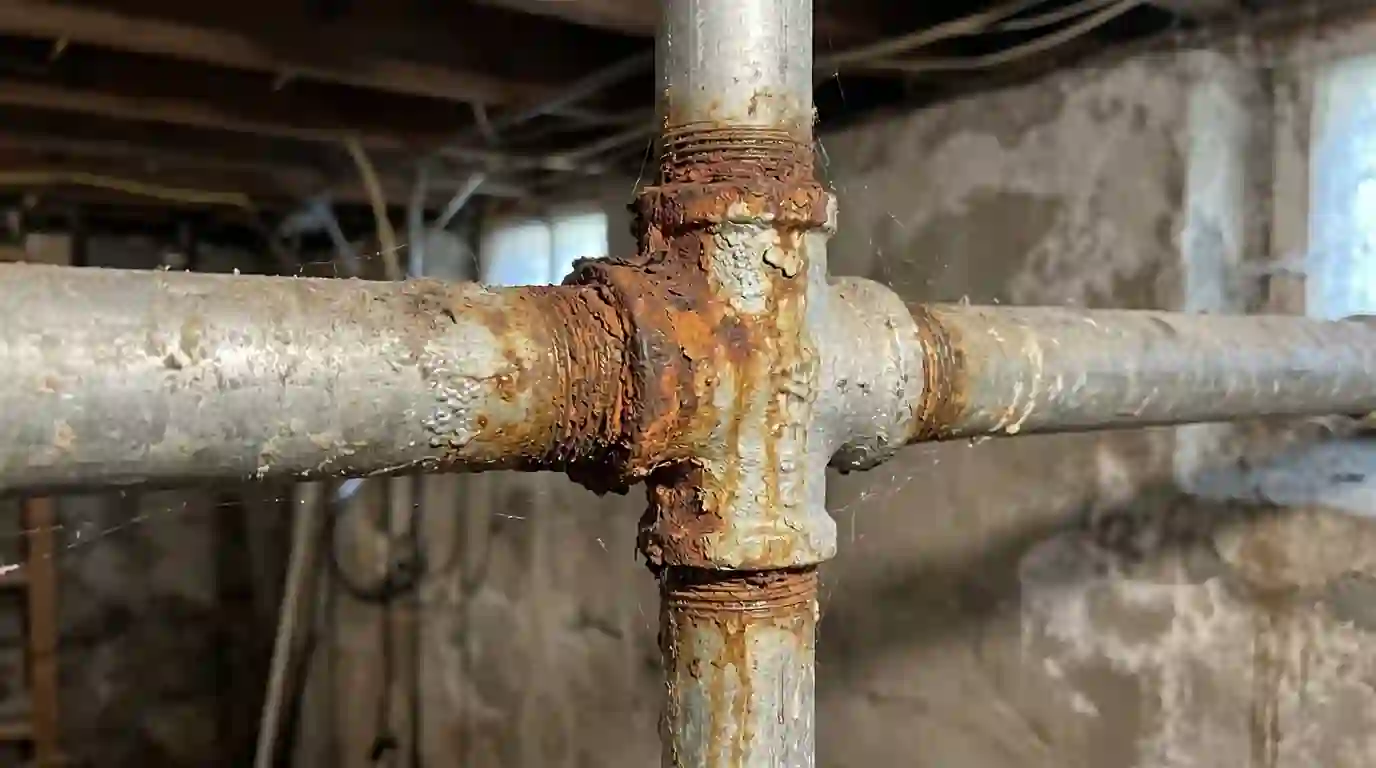
How to identify galvanized pipe
Galvanized steel is dull gray, has threaded fittings and attracts a magnet. Look where pipes are exposed in the basement or under sinks. Many older Denver homes have a mix, with galvanized branches tied to newer copper.
The warning signs
- Brown or rusty water when a faucet first opens
- Low pressure, especially on upper floors
- Pressure that drops when a second fixture runs
- Leaks at threaded joints
- Pinholes or rust stains on the pipe
Why patches stop working
Galvanized pipe corrodes along its whole length, not in one spot. Fixing one leak often stresses the next weak joint. Once leaks become regular, the money spent on repairs is usually better put toward replacement.
What repiping involves
Most homes are repiped in two to five days with PEX or copper. Plumbers open small sections of wall and ceiling to route new lines, and water stays on for most of each day.
Do not forget the service line
If the inside of the home has galvanized pipe, the service line from the street may be galvanized or lead too. Checking it during a repipe avoids leaving an old bottleneck in place.
Want a plumber to take a look?
Call any hour. A person answers and can usually tell you on the phone whether it needs a visit.