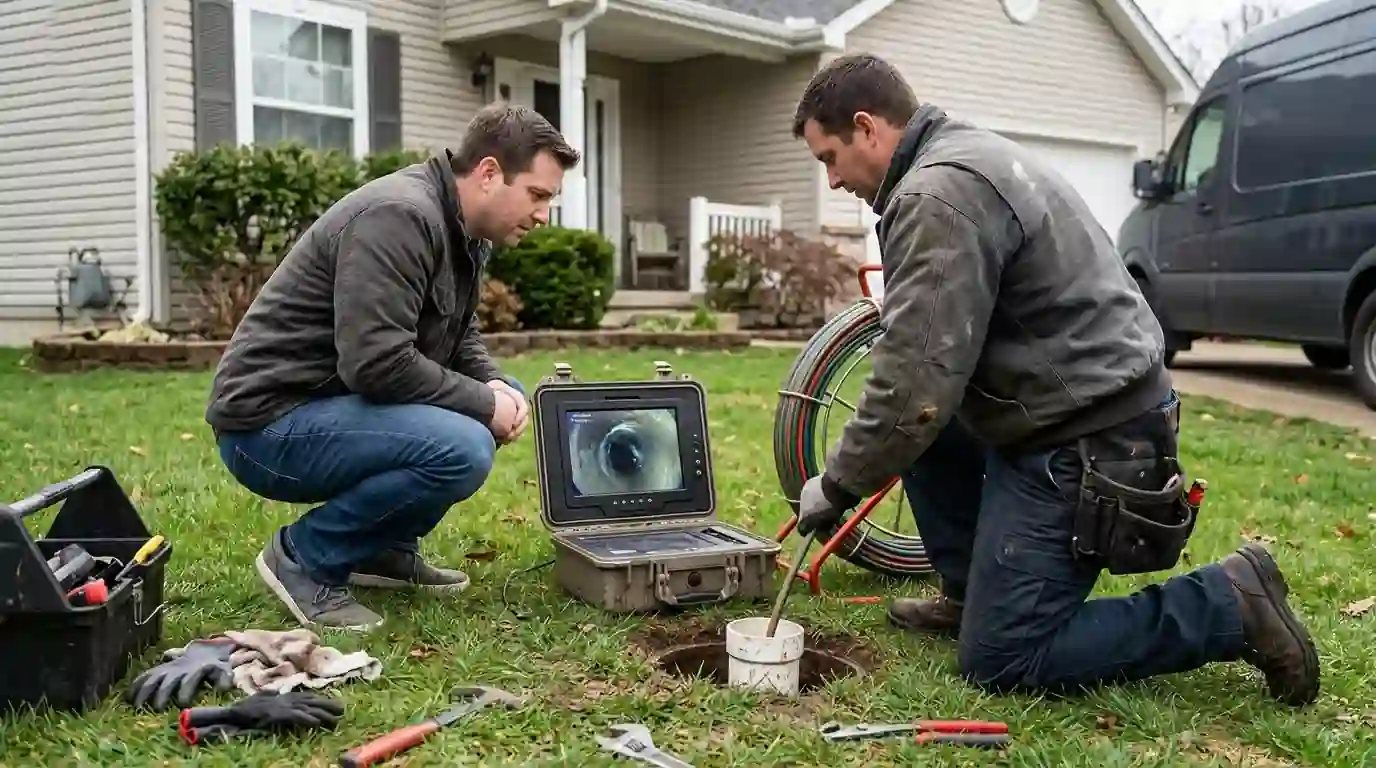
The pipe nobody sees
The sewer lateral runs from your house to the city main, often under the front yard and sometimes under the street. In Denver the owner is generally responsible for all of it. A general home inspection runs water through fixtures, but it cannot see cracks, roots or sags underground.
What the camera finds
In homes built before about 1970, the lateral is often clay tile or cast iron. Clay joints let roots in. Cast iron rusts from the inside. Expansive clay soil along the Front Range shifts joints out of line over decades.
- Root intrusion at joints
- Offset or separated joints
- Bellies where the pipe has sagged and holds water
- Cracks, breaks and collapsed sections
Why it matters at the negotiating table
A lateral replacement can run into five figures if the damage reaches the street. Finding it before closing gives you options: ask the seller to repair, negotiate a credit or walk away. Finding it after you move in leaves you holding the bill.
How to read the report
Small root intrusion at one joint is common and manageable with cleaning. Multiple offsets, a belly holding water or a broken section are bigger issues. Ask for the video and a written description of where problems are and how deep the pipe sits.
Want a plumber to take a look?
Call any hour. A person answers and can usually tell you on the phone whether it needs a visit.